
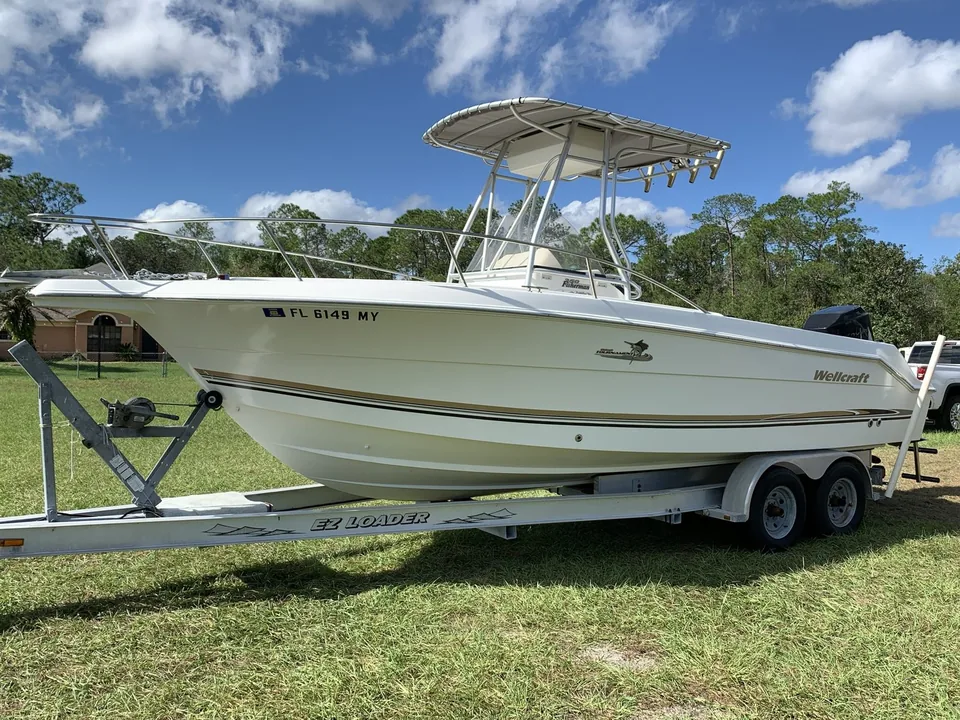
“What is my boat worth?” is the first question every seller asks, and the honest answer is: it depends on more than any single website can tell you. If you’re in Central Florida — Orlando, Lakeland, Kissimmee, or anywhere around the lakes and the coast — here’s how boat pricing actually works, and why the guidebook number and the cash in your hand are usually two different things.
The Value Guides: A Starting Point, Not the Answer
Most people start with a value guide. For boats, that usually means the ABOS Marine Blue Book or the NADA/J.D. Power boat values. Kelley Blue Book (KBB) is the go-to for cars but doesn’t really cover boats — so if someone quotes you a “KBB boat value,” take it with a grain of salt. These guides give you a rough range based on year, make, model and length. That’s useful as a starting point, but it’s built on averages and national data, and it can’t see your specific boat.
The guides don’t know that your outboard has 1,400 hours on it, that the transom is soft, that the trailer bunks are rotted, or that you repowered last season. They also lag the real market — boat values swung hard after 2020, and printed guides are always a step behind what boats are actually trading for on the water in Florida right now.
What Actually Drives Your Boat’s Value
In the real world, a handful of things move the price far more than the guidebook baseline:
The engine. On most boats, the motor is the single biggest value driver. A fresh, low-hour outboard can be worth more than the hull it’s bolted to. A blown or seized engine can flip a boat from an asset to a project overnight.
Hull and transom condition. Stress cracks, soft spots, blisters, and a spongy transom are expensive to fix and scare buyers. Saltwater boats around Tampa and the coast also fight corrosion that freshwater lake boats in Lakeland or Orlando don’t.
The trailer. A solid, registered trailer adds real value and makes the boat easy to move. No trailer means the buyer has to solve that problem, which lowers what they’ll pay.
Electronics, upholstery and extras. Working GPS/fishfinders, newer upholstery, a clean bimini and a kicker motor all add up. Sun-rotted seats and dead electronics subtract.
The market and the season. Boats sell better in spring in Florida, and a clean, popular model (a center console or a pontoon) moves faster than an oddball. Demand is local and seasonal.
KBB/Guide Value vs. a Real Cash Offer
Here’s the part sellers get wrong. A guidebook “retail” value is what a fully reconditioned boat might sell for on a dealer’s lot after they detail it, fix the issues, warranty it and market it for months. That is not what a private buyer hands you, and it’s definitely not a cash-today number. Between retail and a cash offer sits reconditioning cost, transport, the risk that something’s wrong, and the time and money to actually find a buyer.
A real cash offer reflects the boat exactly as it sits, today, with no repairs and no waiting. It will be below the dreamy retail guide number — every fast, as-is sale is — but it’s money in your hand now instead of a listing that sits all summer. When we quote a boat, we look at year, make, model, length, engine hours and condition against what boats are truly selling for in Central Florida this month, then give a firm number that doesn’t drop when we show up.
How to Get a Straight Answer on Your Boat
The fastest way to find out what your boat is worth in cash is to just ask someone who buys boats every week. Text photos — the whole boat, the engine, the hull, the interior and the trailer — plus the year, make, model and engine hours to (321) 977-1194. We’ll come back with a firm cash offer, usually the same day, at no cost and no obligation. If you don’t like the number, you owe us nothing.
We buy across the region: boats in Orlando off the Butler and Conway chains, boats in Tampa off the bay and the Gulf, and boats in Lakeland off the Polk County lakes. We take them running or not, with or without a trailer, saltwater-worn or storm-damaged — see the full rundown on our We Buy Boats page. Curious how the sale itself goes? Our How It Works page covers it start to finish.
Bottom line: use the value guides as a rough starting point, understand what really drives your boat’s worth, and know that a cash offer trades top-dollar for speed and certainty. If speed and certainty sound good, we’re one text away.